
Projects

Linux Kernel Driver - Pressure Sensor

Built a low-level Linux kernel driver in C++ for a pressure sensor, enabling real-time data acquisition and seamless hardware–software integration. Implemented kernel-space modules for direct sensor communication, efficient data buffering, and user-space transfer, and integrated the driver into a larger embedded monitoring system.
IOT Pet Monitoring System

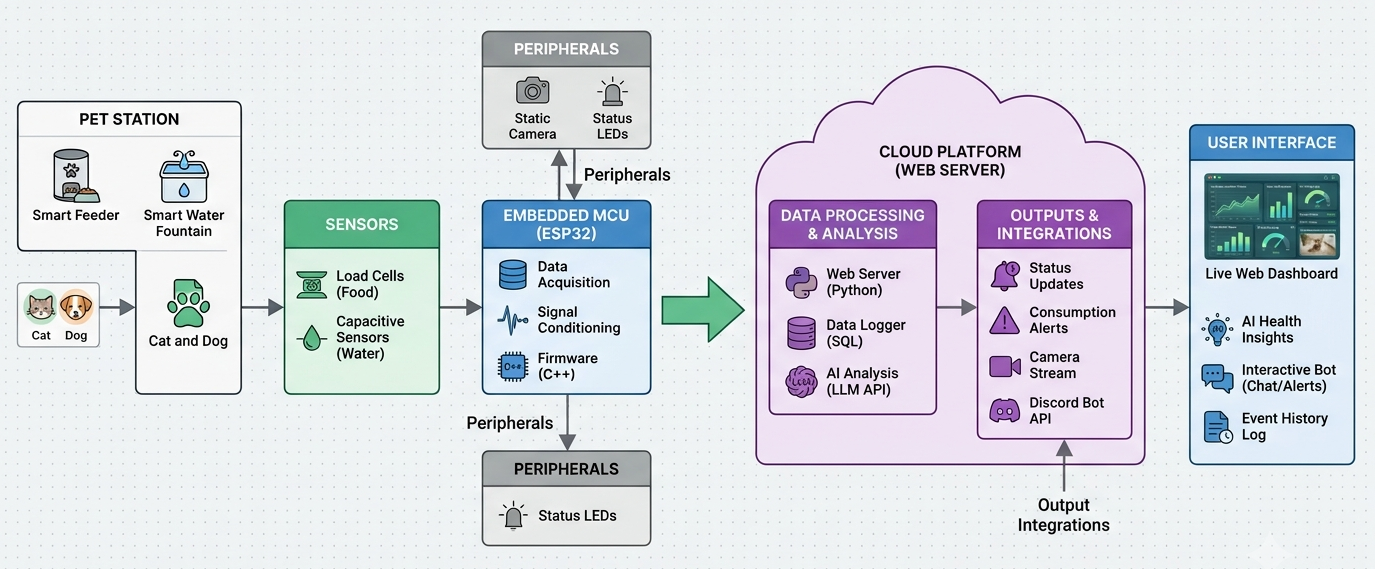
Designed a networked IoT system for real-time tracking of pet food and water levels using microcontroller-based sensors and a Python web server for data processing and visualization. Built device firmware in C++, integrated a Discord bot with live image updates, and incorporated an LLM API for natural, interactive communication.

Face Tracking Robot

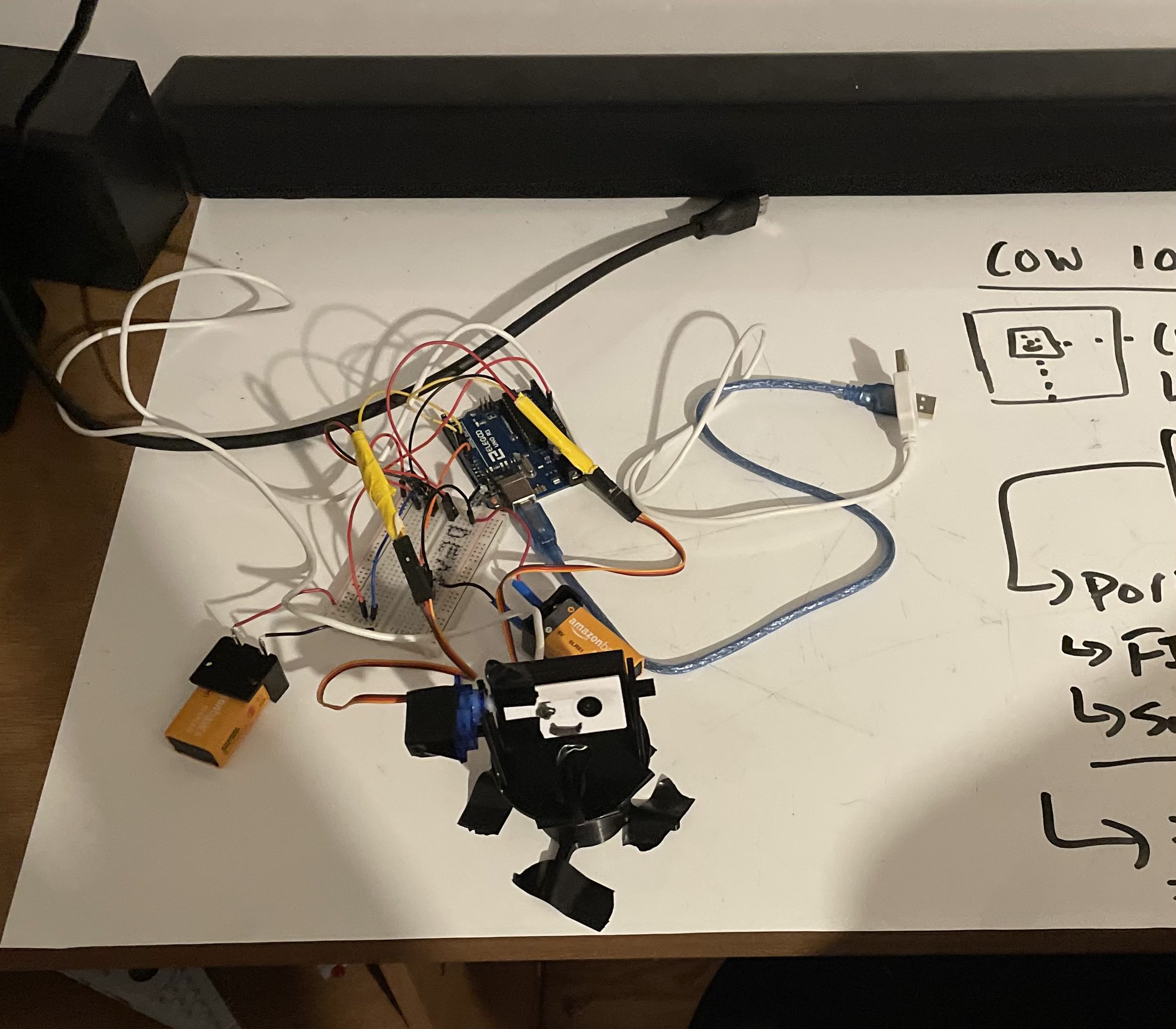
Developed an embedded vision system using OpenCV and a Raspberry Pi to detect and track faces in live video. Implemented servo-based camera control for responsive motion tracking, integrating computer vision with real-time embedded control for smooth, autonomous operation.

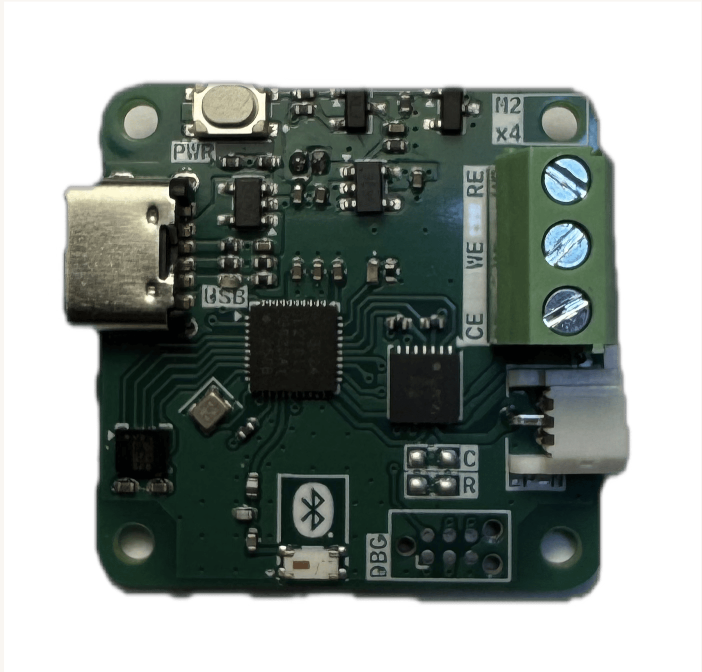
IMU C++ driver for a custom PCB

Developed a C++ hardware abstraction driver for the LSM6DSV 6-axis Inertial Measurement Unit (IMU) integrated into a custom PCB design. The project involved writing firmware to interface directly with the sensor's internal registers and validating the communication loop on custom hardware.

Experience

Undergraduate Researcher

Clarkson University

Potsdam NY  |  May - August 2026


Focusing on the testing, optimization, and deployment of a compact potentiostat circuit built around an LMP91000 analog front end configured with an EFR32BG24 microcontroller. The platform utilizes the MCU's internal IADC and features an LSM6DSV IMU integrated via SPI for synchronized motion tracking. Current efforts involve executing calibration protocols and establishing a robust implementation framework to transition the hardware into external research applications.

Software Engineering Intern

Appcast Inc

Lebanon NH  |  June - August 2025


Developed and maintained internal tooling using Python and SQL to improve operational efficiency for the Labs team. Automated business processes, built new data-driven utilities, reviewed source code, and produced clear technical documentation to support ongoing development and onboarding.

Statistics Tutor

River Valley Community College

Claremont NH  |  June - August 2025


Provided individualized support to students across varying proficiency levels, creating targeted learning materials and strengthening problem-solving and study skills. Fostered a positive, encouraging environment to help students build confidence and improve academic performance.

Relevant Coursework

Systems and Signals Processing

Grade: A


Analyzed continuous and discrete-time signals and systems. Focused on linear time-invariant (LTI) system characterization, transfer functions, and frequency-domain analysis using Laplace and Fourier transforms to evaluate system stability and response

Embedded Systems

Grade: A+


Focused on microcontroller architecture, peripheral configuration, and low-level subsystem integration. Implemented high-reliability serial communication using SPI and I2C protocols to interface external sensors and analog front ends. Optimized internal peripherals—including data converters, timers, and clock management subsystems—to ensure precise hardware control and real-time data acquisition.

Digital Design

Grade: A+


An introductory course covering the fundamentals of computer system hardware. Topics included data representation using number systems and codes, Boolean algebra and logic, digital logic devices, combinational and sequential circuits, arithmetic logic units and simple processor organization including registers, memory, addressing and processing of machine instructions.

Object Oriented Programming

Grade: A+


A thorough introduction to Object Oriented Programming, including classes, inheritance and subtyping, overloading, and overriding. Dynamic memory management. Debugging. Introduction to Testing Driven Development. Introduction to fundamental data structures.

Electrical Science

Grade: A+


Introduced core network concepts and analysis techniques, including DC and AC circuits, circuit elements, mesh and nodal methods, and fundamental network theorems. Covered operational amplifier behavior, time-domain analysis of first-order circuits, and AC tools such as complex numbers, sinusoids, phasors, and RMS values.

Prob & Stat with Mult Analysis

Grade: A+


Focused on core probability concepts, random variables and their distributions, expectations, and Gaussian processes. Covered joint distributions, correlation, and sums of random variables. Introduced essential statistical tools including the central limit theorem, sampling distributions, hypothesis testing, likelihood ratios, and maximum likelihood estimation.

Contact